Sodium Hypochlorite Centrifugal Pump Solutions for Safe and Reliable Chemical Handling

Sodium Hypochlorite Centrifugal Pump Solutions for Safe and Reliable Chemical Handling

Sodium hypochlorite, widely used in water treatment, chemical processing, and cleaning industries, is highly corrosive and requires specialized equipment for safe transfer. A sodium hypochlorite centrifugal pump ensures efficient flow, leak-free operation, and long-term durability when handling this aggressive chemical. Selecting the right pump is essential to avoid corrosion, contamination, and premature equipment failure.


Versatility in Chemical Handling

A well-engineered centrifugal pump for sodium hypochlorite is often designed to handle other corrosive fluids as well. For example, a custom acid circulating pump can be adapted for both oxidizing agents like sodium hypochlorite and strong acids such as sulfuric or phosphoric acid. Similarly, facilities that require multi-chemical transfer benefit from pumps that can manage both hypochlorite and caustic media without compromising safety or efficiency.


Expertise in Acid and Alkali Solutions

When dealing with highly corrosive substances, sourcing from a trusted hydrochloric pump factory ensures quality and performance. RISTER PUMPS produces advanced centrifugal pumps lined with PTFE or other fluoropolymers, providing resistance against hydrochloric acid, sodium hypochlorite, and other aggressive fluids. For alkali handling, RISTER also manufactures robust caustic soda transfer pumps, allowing industries to streamline operations with reliable equipment designed for diverse chemical environments.


Why RISTER PUMPS Leads the Industry

With extensive expertise in corrosive fluid handling, RISTER PUMPS specializes in high-performance solutions for challenging applications. Their sodium hypochlorite centrifugal pumps are engineered for maximum chemical resistance, minimal maintenance, and long service life. Beyond product quality, RISTER provides technical consultation, fast delivery, and customized designs to meet specific operational needs.


Conclusion

For industries requiring safe and efficient transfer of sodium hypochlorite and other corrosive chemicals, RISTER PUMPS delivers comprehensive solutions—from custom acid circulating pumps to caustic soda transfer pumps—all backed by the experience and reliability of a professional hydrochloric pump factory. RISTER’s engineering expertise ensures that every pump performs with durability, safety, and efficiency in even the harshest environments.
Technical Guide to Choosing the Right Soda Pump for Safe and Efficient Caustic Transfer

Technical Guide to Choosing the Right Soda Pump for Safe and Efficient Caustic Transfer

Handling caustic soda (sodium hydroxide) in industrial processes requires equipment that offers both chemical resistance and operational safety. A soda pump plays a critical role in the transfer, circulation, and unloading of caustic solutions. Whether used in wastewater treatment, chemical manufacturing, or textile processing, the proper pump selection can significantly improve system performance and safety.

Why Chemical Compatibility Matters in Acid and Caustic Handling

Though often used in similar facilities, caustic soda and acids have very different chemical properties, and using the wrong pump materials can lead to equipment failure. For transferring both corrosive acids and strong bases like caustic soda, industries rely on acid transfer pumps that are made from chemically resistant materials. Among the most trusted solutions are Teflon pumps, known for their excellent compatibility with a wide range of aggressive chemicals.

The Advantage of Teflon Pumps in Soda Transfer

Teflon pumps (PTFE or PFA-lined) are highly recommended for transferring caustic soda due to their exceptional resistance to chemical attack and high temperatures. These non-metallic pumps prevent corrosion, scaling, and chemical degradation even in continuous operation. Unlike metal pumps, Teflon-lined pumps ensure longer service life and reduce maintenance, especially in systems where purity and leak-free performance are essential. They are also ideal for dual chemical environments, handling both acids and alkalis without cross-contamination or damage.

Reliable Performance in Acid Unloading Applications

In operations involving both acid and caustic handling—such as tanker unloading or chemical storage systems—selecting a multi-compatible acid unloading pump is crucial. RISTER's Teflon-lined centrifugal and magnetic drive pumps are engineered for such environments, capable of safely transferring various corrosive fluids, including hydrochloric acid, sulfuric acid, and caustic soda. This versatility reduces the need for multiple pump types and simplifies maintenance and inventory.

RISTER PUMPS: High-Performance Soda Pump Solutions

As a professional manufacturer of chemical transfer equipment, RISTER PUMPS offers a full range of specialized pumps, including soda pumps, acid transfer pumps, and acid unloading pumps. With a strong focus on Teflon-lined technology, RISTER ensures that every pump meets the highest standards of safety, durability, and performance. Each product is thoroughly tested and backed by expert engineering support, giving customers confidence in demanding environments.

In addition to top-tier products, RISTER PUMPS stands out with fast delivery times, flexible customization, and responsive after-sales service. Whether you're operating a caustic soda dosing system or a large-scale chemical transfer plant, RISTER provides pump solutions that are as reliable as they are innovative—designed to keep your processes running safely and efficiently.

Technical Insights into Caustic Soda Transfer Pumps

Technical Insights into Caustic Soda Transfer Pumps

Handling caustic soda (NaOH) safely requires specialized pumping solutions that can withstand its highly alkaline and corrosive nature. A well-designed Caustic soda transfer pump is essential for ensuring operational safety, reducing maintenance costs, and extending system service life.


Technical Requirements for Caustic Soda Applications

Caustic soda is highly reactive with common metals, so pumps must be built with non-metallic materials or advanced linings. Engineering options such as Custom Acid circulating pump systems provide flexibility for industries that require tailored solutions. Materials like PTFE, PFA, and engineered plastics are often selected to achieve maximum chemical resistance and reliability.


Performance and Compatibility Across Chemical Systems

In many chemical plants, the Sodium hypochlorite centrifugal pump is used alongside caustic soda transfer systems due to their similar corrosion challenges. Likewise, the ZMD self-priming pump offers reliable startup and transfer capability without manual priming, making it highly suitable for continuous or batch operations where downtime must be minimized.


Industry Applications

Caustic soda transfer pumps are widely applied in chemical production, pulp and paper, textiles, food processing, and wastewater treatment. These pumps not only provide secure handling of sodium hydroxide but also protect downstream equipment from corrosive damage, ensuring process stability and compliance with safety standards.


Pump Type Comparison for Caustic Soda Handling

Pump Type

Key Advantage

Application Suitability

Caustic soda transfer pump

Optimized for NaOH handling

General industrial transfer, dosing

Custom Acid circulating pump

Tailored material and design options

High-demand chemical process systems

Sodium hypochlorite centrifugal pump

Corrosion resistance to oxidizing agents

Water treatment & chemical blending

ZMD self-priming pump

Easy startup without manual priming

Batch transfer, intermittent operations


Advantages of KJB CENTRIFUGAL PUMP and RISTER PUMPS

KJB CENTRIFUGAL PUMP delivers durable and precise pump solutions specifically engineered for corrosive fluids. Combined with RISTER PUMPS, clients benefit from fast delivery schedules, technical support, and reliable after-sales services. This synergy ensures industries receive high-performance pumps supported by world-class service, making RISTER a trusted partner in chemical handling.

Technical Insights into Sulfuric Acid Pumps Choosing the Right H2SO4 Pump for Industrial Applications

Technical Insights into Sulfuric Acid Pumps: Choosing the Right H2SO4 Pump for Industrial Applications

Sulfuric acid (H₂SO₄) is among the most widely used industrial chemicals, essential in sectors such as fertilizer production, petroleum refining, battery manufacturing, and chemical processing. However, its highly corrosive nature requires specially designed sulphuric acid pumps to ensure safe and efficient handling. In industrial environments where uptime, safety, and long-term reliability are critical, choosing the right H2SO4 pumps is a technical necessity rather than a simple equipment choice.

Key Design Considerations for H2SO4 Pumps

Transferring sulfuric acid requires more than just chemical resistance; it demands robust engineering. H2SO4 pumps must withstand a wide range of concentrations—from dilute solutions to highly concentrated forms—and must do so without degrading, leaking, or introducing contaminants. Proper selection of materials, seals, and internal components is crucial. Pumps made from or lined with chemically inert materials such as PTFE (Teflon) are especially effective, as they resist corrosion and maintain structural integrity under extreme operating conditions.

Teflon Pumps: A Superior Solution for Sulfuric Acid Transfer

PTFE-lined or fully Teflon sulphuric acid pumps offer unmatched chemical resistance and thermal stability. Teflon’s non-reactive surface prevents the acid from attacking the pump’s internal components, dramatically extending service life and reducing maintenance frequency. Additionally, Teflon pumps help maintain fluid purity, which is essential in applications where contamination can impact product quality or downstream processes. Their resistance to both high temperatures and chemical attack makes them ideal for handling aggressive acids like sulfuric acid.

RISTER PUMPS: Excellence in H2SO4 Pump Engineering

When it comes to designing and manufacturing reliable H2SO4 pumps, RISTER PUMPS has positioned itself as a leader in the industry. With years of experience in corrosive fluid handling, RISTER specializes in producing Teflon-lined centrifugal and magnetic pumps optimized for sulfuric acid applications. These pumps are engineered with safety, durability, and performance in mind, ensuring stable operation even under the most demanding chemical conditions.

RISTER’s Competitive Advantage

Beyond product quality, RISTER PUMPS delivers added value through technical consulting, rapid customization, and fast delivery cycles. Their team of engineers works closely with clients to provide pump configurations that meet exact system requirements, whether for large-scale chemical production or precise dosing applications. RISTER’s deep understanding of acid dynamics, combined with premium materials and modern manufacturing, makes them the go-to choice for industrial users in need of high-performance sulphuric acid pumps.

In conclusion, handling sulfuric acid safely and efficiently starts with the right technology. With advanced Teflon pump solutions and unmatched industry expertise, RISTER PUMPS offers a complete answer to your H2SO4 pump needs—ensuring long-term safety, operational efficiency, and cost-effectiveness.

Teflon Lined Steel Pipe The Smart Choice for Corrosive Applications

Teflon Lined Steel Pipe: The Smart Choice for Corrosive Applications

In today’s industrial environment, safe and efficient fluid transport is critical—especially when dealing with corrosive, hazardous, or high-purity materials. That’s where Teflon lined steel pipe systems shine. By combining the structural integrity of carbon or stainless steel with the exceptional chemical resistance of PTFE (commonly known as Teflon), these lined pipes offer superior performance in demanding environments.

PTFE lined piping is designed to handle a wide range of aggressive chemicals, from strong acids to organic solvents. The PTFE lining acts as a barrier that resists corrosion, prevents contamination, and ensures long-lasting durability. Whether it’s in chemical processing, pharmaceuticals, or semiconductor manufacturing, Teflon lined systems reduce downtime and maintenance costs significantly.

An efficient piping system is incomplete without the right fittings. Components like the Teflon lined elbow provide smooth, corrosion-proof directional changes in flow, ensuring consistent performance across the entire pipeline. Likewise, a PTFE lined tee allows for secure branching in the system without compromising chemical resistance or mechanical strength.

One of the key advantages of choosing Teflon lined steel pipe solutions is their adaptability. They can withstand a wide range of temperatures and pressures while maintaining a non-stick, low-friction internal surface—helping to preserve product purity and optimize flow dynamics.

Whether you're building a new processing line or upgrading an existing one, choosing PTFE lined piping components—such as Teflon lined elbows and PTFE lined tees—ensures safety, reliability, and longevity. For a complete, corrosion-resistant piping solution, Teflon-lined steel is the industry standard.

Understanding Standardised Chemical Pumps

Understanding Standardised Chemical Pumps

A standardised chemical pump plays a crucial role in modern industrial applications where consistent performance, safety, and durability are essential. These pumps are engineered according to international standards, ensuring high interchangeability and reliability for handling a variety of corrosive and hazardous chemicals. They are widely used in industries such as chemical processing, pharmaceuticals, petrochemicals, and water treatment.

Efficiency and Chemical Compatibility

One of the most important advantages of a standardised chemical pump is its ability to handle aggressive media. Whether it’s an Acid circulating pump for sulfuric acid or an hcl transfer pump for hydrochloric acid, these pumps provide excellent corrosion resistance and stable flow performance. The materials used—such as PTFE, PVDF, or UHMW-PE—help ensure safe chemical transfer even under demanding conditions.

Application in Sodium Hypochlorite Systems

For facilities managing disinfectants or oxidizing chemicals, the Sodium hypochlorite centrifugal pump is a vital component. It is designed to withstand the oxidative stress and corrosive nature of sodium hypochlorite, ensuring long-lasting operation and minimizing maintenance downtime. When integrated with standardized designs, these pumps provide greater operational safety and reduced leakage risks.

Design and Performance Advantages

Standardised chemical pumps offer high efficiency, modular construction, and easy replacement of parts. Their optimized hydraulic design reduces energy consumption while maintaining high flow rates and consistent pressure. This makes them ideal for continuous industrial use where both reliability and cost-efficiency are critical.

Safety and Maintenance

These pumps are equipped with advanced sealing technologies that prevent leakage of toxic or volatile chemicals. The standardized structure allows for easier maintenance and part interchangeability, minimizing downtime during repairs or inspections.

Environmental and Operational Benefits

Standardised chemical pumps contribute to sustainable operations by reducing waste, leakage, and energy usage. Their robust design supports long-term use in harsh environments, from chemical plants to wastewater treatment facilities.

UHMW-PE Centrifugal Pump – The Ideal Choice

At the core of corrosion resistance and durability lies the UHMW-PE centrifugal pump. Known for its superior wear and chemical resistance, UHMW-PE material ensures stability even when transferring strong acids, alkalis, and solvents. It’s perfectly suited for applications in chemical manufacturing, electroplating, pickling, and water treatment industries.

Why Choose RISTER PUMPS

RISTER PUMPS is a trusted manufacturer recognized for precision engineering, material innovation, and excellent customer service. With extensive experience in designing standardised and customized chemical pumps, RISTER provides solutions that combine efficiency, safety, and longevity. Their technical expertise and responsive after-sales service make them a preferred partner for global industries handling aggressive and corrosive fluids.

In every standardised chemical pump solution, RISTER PUMPS delivers not just reliable equipment but also long-term value through professional support, customization, and continuous innovation.

Unlocking Efficiency with Self-Priming Pumps in Chemical Applications

Unlocking Efficiency with Self-Priming Pumps in Chemical Applications


In demanding chemical processing environments, equipment reliability and efficiency are non-negotiable. Among the most versatile and dependable tools in this field is the self-priming pump. Unlike traditional centrifugal pumps, a self-priming pump can evacuate air from the suction line and prime itself without needing manual intervention or additional vacuum systems—making it a preferred choice across various industries.


A self priming chemical transfer pump is particularly valuable in handling aggressive or hazardous liquids. Its ability to manage both fluids and air mixtures without losing pumping capacity makes it ideal for chemical unloading, transfer, and circulation applications. Whether in offloading tanks or circulating chemicals through treatment systems, these pumps offer both safety and performance.


The self priming chemical pump is engineered to resist corrosion, often constructed with materials like stainless steel, polypropylene, or fluoropolymers. This ensures long-term durability when working with acids, alkalis, or solvents. Additionally, its easy maintenance and minimal operational oversight reduce downtime, making it a smart investment for facilities seeking efficiency and cost control.


Choosing the right self priming pump manufacturer is crucial. Beyond technical specifications, manufacturers must offer proven reliability, custom options, and expert guidance tailored to your application. An experienced manufacturer can also help integrate self-priming pumps into complex systems with minimal modification or disruption.


RISTER stands out as a trusted name in the field of self priming pumps. With decades of engineering experience and a focus on chemical compatibility, RISTER provides high-performance pumps designed for safety, efficiency, and longevity. Their self-priming chemical pumps are precision-built to handle corrosive fluids with ease and are backed by responsive technical support and tailored solutions. For businesses seeking a reliable partner in fluid handling, RISTER offers unmatched value and expertise.


Why PTFE Lined Piping Is the Ideal Solution for Corrosive Fluid Transport

Why PTFE Lined Piping Is the Ideal Solution for Corrosive Fluid Transport

In industries that deal with aggressive chemicals and high-purity processes, the choice of piping material is critical. PTFE lined piping offers outstanding chemical resistance, making it a top solution for safely transporting corrosive media. Unlike conventional metal or rubber lined pipe options, PTFE lining provides superior durability, non-stick performance, and resistance to almost all industrial acids, bases, and solvents.

Lined Pipe: The Smart Investment for Long-Term Reliability

A lined pipe combines the strength of metal with the chemical resistance of internal liners such as PTFE or PFA. While rubber linings are suitable for some mildly corrosive applications, they often degrade over time when exposed to highly aggressive chemicals or elevated temperatures. PTFE, on the other hand, is virtually inert and operates efficiently across a wide temperature range, making it ideal for chemical, pharmaceutical, and semiconductor industries.

The Role of PFA Lined Tees in System Integration

For complex piping networks, fittings like the PFA lined tee are essential. These components allow for multi-directional flow and system flexibility without compromising chemical resistance. PFA, a close cousin to PTFE, offers excellent clarity and mechanical strength, making it ideal for high-purity environments. Combined with PTFE-lined pipes, PFA lined tees ensure that every part of the fluid path is protected from corrosion and contamination.

RISTER+PIPE: Engineered Excellence in Lined Piping Solutions

When it comes to quality and reliability, RISTER+PIPE stands out in the industry. As a trusted supplier of PTFE lined piping, rubber lined pipe, and custom PFA-lined components, RISTER delivers superior craftsmanship and technical expertise. All products are manufactured to meet international standards, ensuring safety, longevity, and process compatibility.

In addition to top-tier product quality, RISTER+PIPE provides tailored solutions, fast delivery, and expert support. Whether you're upgrading an existing system or building a new process line, RISTER ensures that your lined piping system performs flawlessly—making them the preferred partner for industries where chemical resistance and safety are non-negotiable.

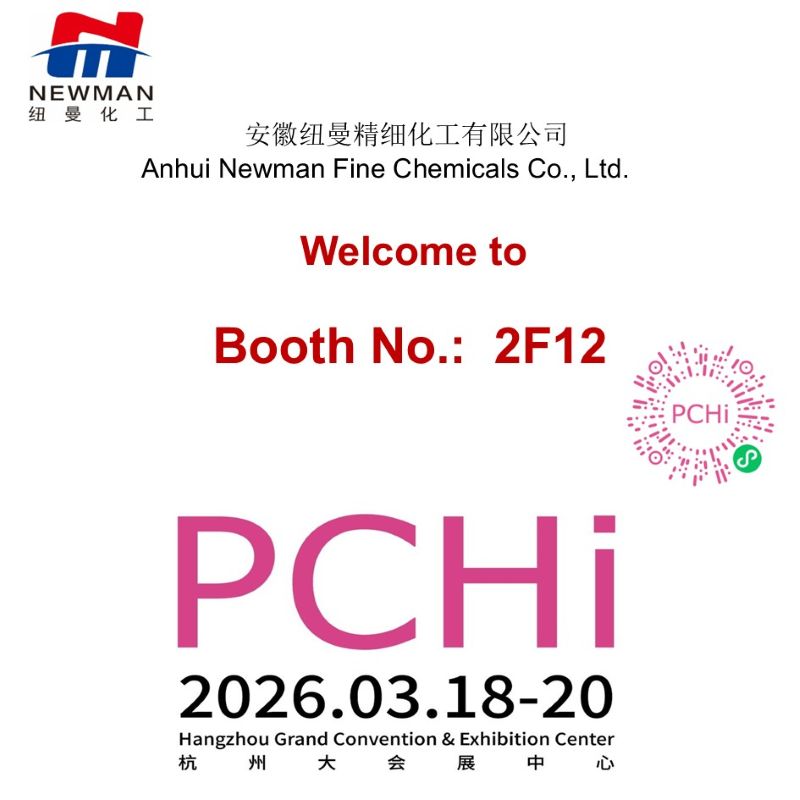
Welcome our booth 2F12 PCHi 18-20.March 2026, Hangzhou, China

Personal care and home care ingredients (PCHi2026) will be held  at the Hangzhou Convention and Exhibition Center from March 18th to 20th, 2026. As an important event in the global personal care and household care products raw materials sector, this exhibition brings together 800+ exhibitors from around the world and 50,000+ industry professionals. Newman Chemicals will showcase its full range of products and customized solutions and will engage with global industry partners to discuss technological innovation and explore new development chapters.


Against the backdrop of accelerated domestic substitution and global supply chain restructuring, Chinese cosmetics raw material enterprises are experiencing unprecedented development opportunities. Newman Chemicals' participation in PCHI 2026 is not only a concentrated display of the innovation capabilities of local enterprises, but also demonstrates its determination to deeply integrate into the global industrial ecosystem and promote collaborative innovation in the industry.


PCHi 2026 Newman chemicals carbomer


We have been launching and improving our traditional carbomer 960,970,996, 990 etc., improve carbomer 20,21,10, and 30. Especially, we launched polymeric emulsifier  NM-Carbomer TR series, NM-Carbomer TR-1, TR-2 and TR-3 ,are versatile, non-ethoxylated polymer designed to create stable and mild oil-in-water emulsions at low use levels. Not only thickening ,suspending ability ,but also good emulsifying, and they are  great choice for use in many skin care formulations, providing emulsion stability, smooth texture, and a pleasant fresh sensory for emulsions.


At the same time, the liquid carbomer NM-Carbomer SF-1, NM-Carbomer Aqua10 and NM-Carbomer Aqua 20 are also introduced, which are easy to use liquid forms and have good synergic thickening effect with surfactants, micelles and hydrophobic raw materials due to special chemical structure. Excellent salt resistance. We also specially launched the NM-Carbomer Aqua 25, INCI name: Acrylates/ Steareth-20 Methacrylate Crosspolymer, NM-Carbomer Aqua 25 is an anionic hydrophobically modified alkali-soluble acrylic polymer emulsion (HASE) with unusually high aqueous thickening and stabilizing efficiency. Specifically imparting efficient thickening properties for amino acid surfactant systems, and has excellent clarity gels , which can be extensively applied for formulations containing high levels of surfactant.


Our heath care and Oral care grade carbomer are focused on, such as NM-Carbomer 934P as a thickener and co-binder for Aqueous toothpaste formulations , NM-Carbomer 974P as now preferred thickeners for anhydrous toothpaste formulations, and NM-Carbomer 971P for mouth rinses.


At the same time, we continue to launch film forming, thickening and lubrication polyvinylpyrrolidone homopolymer such as PVP K30, K90, K17, K25, and PVP/VA copolymer such as PVP/VA64, PVP/VA73 and other series of products.


Cherishing to see you at our booth 2F12. We are looking forward to sharing  our innovative achievements and discussing the future of personal care and home care fields.


What is the antioxidant effect of ferrite magnets?(1)

Contact more customers, there will always be a lot of questions, such as a user asked, ferrite magnet can be saved for how long? Does oxidation of ferrite affect its properties?

Today I will reply to these two questions.


Ferrite, also known as permanent magnet ferrite, chemically known as ferric oxide, is already an oxide of iron, and it is difficult to be oxidized again. For the magnetic ring, its characteristics are long-term, there will be no deterioration, but put for a long time, there will be residue on the surface - some powder, this is a normal phenomenon, does not hinder its characteristics.


As we all know, ferrite magnet is made of a variety of magnetic materials, so put for a long time, the magnet will appear powder, which is what we say in the industry oxidation, but this does not affect its magnetic properties and impedance characteristics. The magnet will also be easy to oxidize when it encounters moisture, especially in wet weather. If the magnetic ring of the packaging is not sealed well and the moisture runs into the carton, it will also lead to oxidation of the magnetic ring.


Many people will ask, the magnet in production is not through water to clean the surface? How can also be afraid of water, of course, the magnetic ring is through the water to wash off the dirty surface, but after cleaning, the magnet to enter the oven to dry water, so just made of the magnet, not oxidation, and just washed out of the magnetic ring appearance, shiny!