In industrial refrigeration and central air conditioning systems, oil-free technology has become a clear industry trend. Among the most advanced oil-free cooling technologies, magnetic bearing chillers and air bearing chillers are increasingly replacing traditional screw and centrifugal chillers due to their advantages in energy efficiency, low noise, and reduced maintenance.
However, many businesses struggle with one key question: Should you choose a magnetic bearing chiller or an air bearing chiller? The truth is, there is no absolute winner. The best choice depends on your actual operating conditions, budget, and cooling requirements.
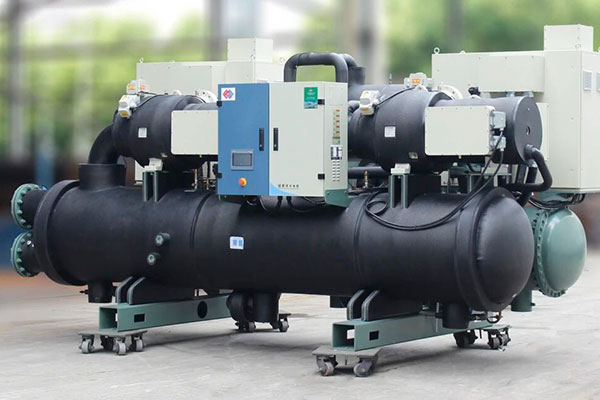
What Is the Difference Between Magnetic Bearing and Air Bearing Chillers?
To understand how to choose, it helps to know the basic working principle of each system.
A magnetic bearing chiller works like a high-speed train. It uses electromagnetic force to suspend the compressor shaft without physical contact. A sophisticated control system continuously adjusts the magnetic field to keep the rotor perfectly centered.
An air bearing chiller, on the other hand, operates more like a hovercraft. It creates a thin air film through high-speed rotation, allowing the shaft to float naturally without external electromagnetic support.
This fundamental difference directly impacts their performance, maintenance, cost, and application scenarios.
Which Chiller Is More Energy Efficient?
Energy efficiency is usually the first factor companies consider.
Many manufacturers highlight IPLV (Integrated Part Load Value) when comparing systems, but actual operating performance differs significantly depending on load conditions.
Magnetic Bearing Chillers: Better for Partial Loads
Magnetic bearing chillers excel in low-load and variable-load conditions. They can achieve 5%–100% stepless capacity control, delivering exceptional efficiency at 20%–50% load operation.
In many cases, their IPLV can exceed 11, making them ideal for facilities with fluctuating cooling demand.
Typical applications include:
• Office buildings
• Hotels
• Shopping malls
• Industrial facilities with varying production schedules
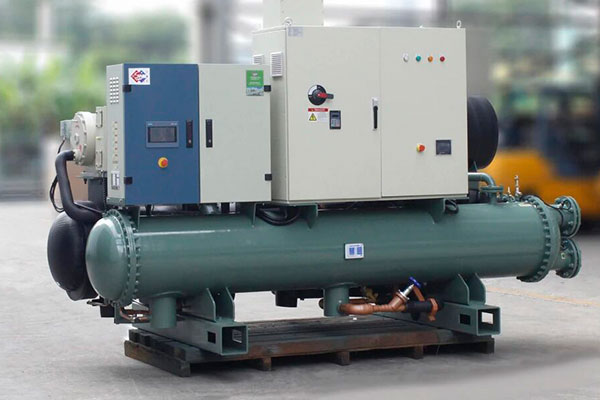
Air Bearing Chillers: Better for Full Load Operation
Air bearing chillers perform exceptionally well under stable, high-load conditions. Their bearing system consumes less power than magnetic systems, which improves efficiency during full-load operation.
However, when operating below 30% load, stability and efficiency may decline.
If your facility runs 24/7 at near-full capacity, the energy consumption difference between magnetic and air bearing chillers becomes relatively small.
Maintenance and Reliability: Which Is Easier to Manage?
Air Bearing Chillers: Simpler Structure
Air bearing chillers feature a simpler mechanical design without complicated electromagnetic control systems.
Advantages include:
• Fewer potential failure points
• Stronger anti-interference capability
• No dependency on backup battery systems during power outages
• Easier and lower-cost maintenance
However, air bearing systems are more sensitive to air cleanliness. Regular cleaning of intake filters is essential to prevent dust damage to bearings.
Magnetic Bearing Chillers: More Precise but More Complex
Magnetic bearing chillers rely on advanced electronic control systems, making them more sensitive to power quality.
In the event of power loss, backup batteries are required to protect the magnetic bearing system.
The advantage is extremely low vibration and ultra-quiet operation, which makes them ideal for sensitive environments.
Both technologies are oil-free, eliminating oil changes, oil filters, and lubrication-related maintenance costs.
Initial Investment vs. Long-Term Savings
In terms of upfront cost, air bearing chillers are generally 5%–15% less expensive than magnetic bearing chillers with similar cooling capacities.
This is because magnetic systems require:
• Electromagnetic bearings
• Precision controllers
• Advanced sensors and backup systems
However, if your facility experiences significant load fluctuations, the additional investment in a magnetic bearing chiller can often be recovered through electricity savings within 3–5 years.
For maintenance costs:
• Magnetic bearing systems may require manufacturer-specific repairs, which can be more expensive.
• Air bearing systems are simpler and easier to service, reducing maintenance expenses.
How Should You Choose?
Choose Magnetic Bearing Chillers If:
• Your cooling load changes frequently
• Your building operates mostly under partial load
• Noise and vibration control are critical
• You manage commercial buildings such as offices, hotels, or shopping centers
• Your project prioritizes long-term energy savings
Choose Air Bearing Chillers If:
• Your factory runs 24/7 continuous production
• Cooling demand remains stable year-round
• Budget is a key concern
• You need a reliable, cost-effective solution with simple maintenance
• Your environment has good air quality and stable operating conditions
Special Applications
For hospitals, laboratories, and ultra-quiet environments, magnetic bearing chillers are generally the better choice due to lower vibration and noise.
For remote industrial sites with unstable power supply or simpler maintenance requirements, air bearing chillers may provide stronger adaptability.
Final Thoughts
When selecting between a magnetic bearing chiller and an air bearing chiller, avoid relying solely on manufacturer marketing data.
Instead, evaluate:
• Annual full-load operating hours
• Partial-load operating time
• Initial investment budget
• Long-term energy savings
• Maintenance requirements
• Site-specific environmental conditions
By carefully matching the chiller type to your real operating conditions, you can maximize energy efficiency, reduce lifecycle costs, and achieve more reliable cooling performance.